If you are wondering how to promote your music, the honest answer is not "post more" or "buy ads and hope." Promotion works when the release has a job, the campaign has a calendar, and every channel points listeners toward a clear next action. That action might be a save, a follow, a ticket, a merch click, an email signup, or a direct share. Streams matter, but they are only part of the picture.
Independent artists have a harder task than label-backed acts because the same person often has to be artist, manager, content lead, campaign planner, data analyst, and finance department. That is exactly why a simple operating plan beats a messy burst of activity. The goal is to make each release easier to understand, easier to find, easier to support, and easier to learn from.
This guide is built for artists who want a practical release campaign they can actually run. It connects music marketing strategy with release timing, social content, streaming profile work, direct fan channels, and post-release measurement.
Start with the release goal
A campaign without a goal turns into a mood board with deadlines. Before choosing channels, decide what the release is supposed to do for the artist business. A debut single may need recognition and follows. A second single may need repeat listeners and saves. A tour-linked release may need ticket interest in a few cities. A merch-linked release may need direct fan clicks more than raw playlist reach.
Pick one primary goal and two supporting signals. For example: "Drive first-week saves" can be supported by short video watch-throughs and email clicks. "Sell 50 shirts tied to the single" can be supported by landing-page visits and direct fan replies. "Build a stronger live audience" can be supported by city-level listener growth and ticket-page clicks.
So, Indie is built around that kind of connected view. The platform's marketing tools, release workflows, and royalty visibility are most useful when the artist knows what the campaign is trying to prove. Without that, every number feels urgent and none of them feel decisive.
Build a four-week campaign instead of a release-day panic
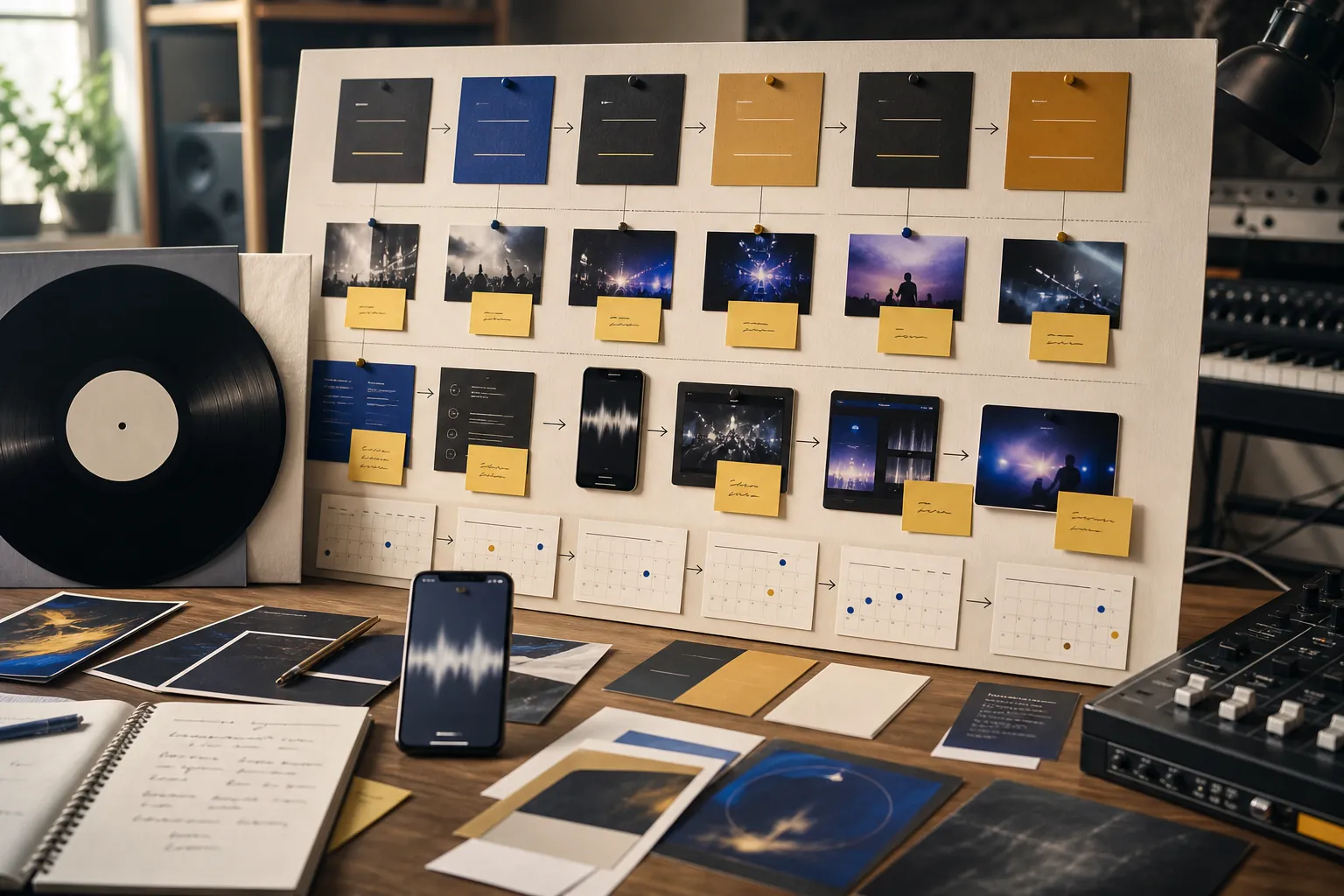
Release day should be a moment, not the beginning of the plan. A simple four-week campaign gives you enough room to prepare assets, warm up existing listeners, pitch the song, and keep the story moving after the track is live. If you have more time, use it. If you have less, compress the plan, but keep the order.
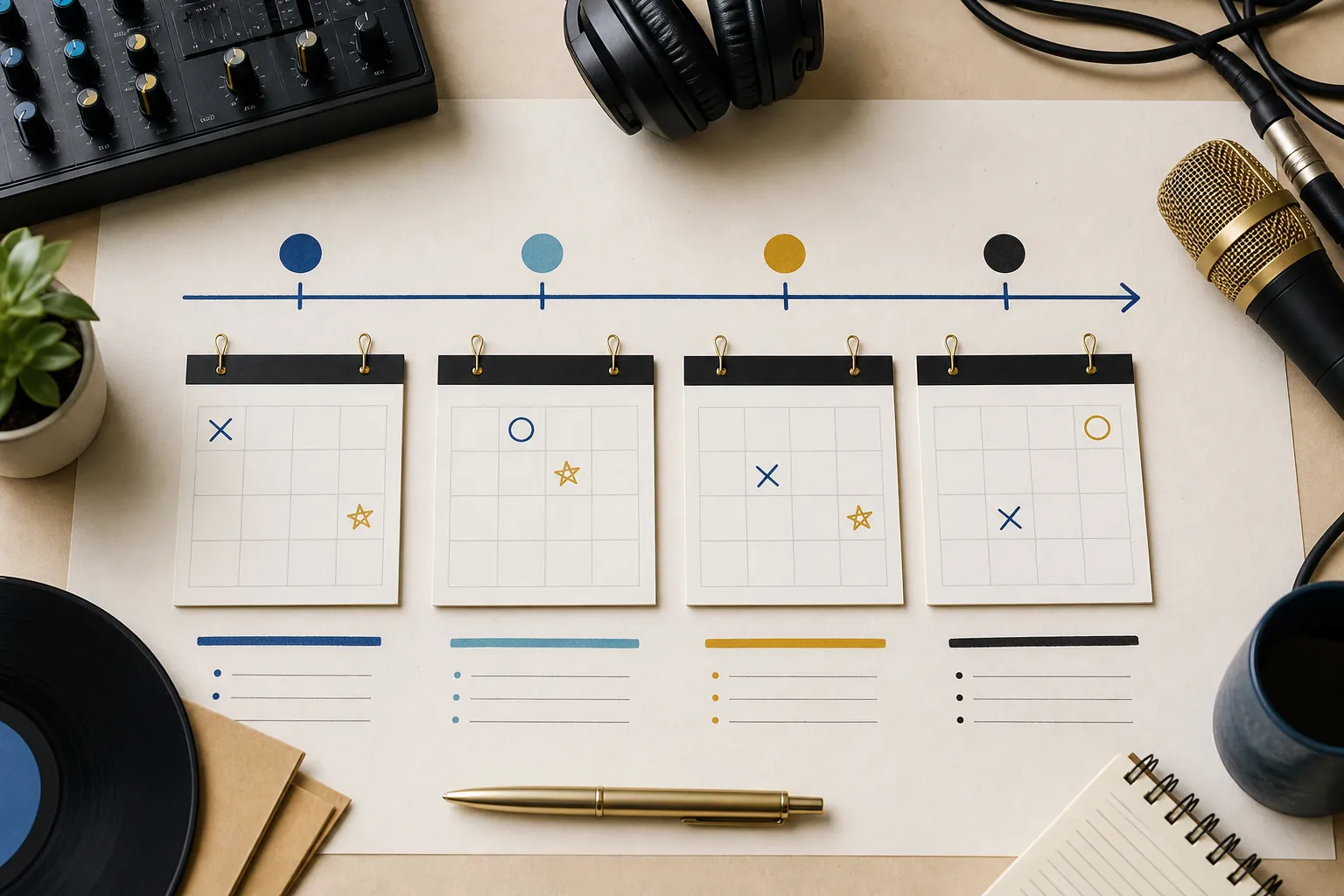
Four weeks out, lock the core assets: cover art, short biography, release date, smart link or pre-save path, press photos, teaser clips, lyric fragments, and the main story of the song. This is also when you should clean up artist profiles and make sure the release information matches across channels.
Three weeks out, start testing the hook. Share short pieces of the song, the story behind it, the visual world, and the problem or feeling the track speaks to. Do not ask the same audience to pre-save every day with no new reason. Rotate the angle: creation story, lyric moment, behind-the-scenes clip, live version, collaborator story, and fan question.
Two weeks out, make the release easy to act on. Spotify says artists can pitch unreleased music to editorial teams and that pitching at least two weeks before release also helps the track appear in followers' Release Radar playlists. Its playlisting guidance also stresses that details such as genre, mood, location, collaborators, and story help editors understand where a song might fit. Spotify for Artists' release guide and playlisting guidance are worth checking before the campaign is already on fire.
Release week is for concentrated action: announce the song, update pinned links, ask fans for one clear action, repost listener reactions, send the email, share the strongest short-form clip, check platform links, and invite direct replies. The week after release is where many artists go quiet too soon. Spotify has said that most first-year streams for a release happen after the first month, which is a useful reminder that the post-release plan matters. Keep giving the song new entry points.
Give the campaign one clear story
People do not share a song because an artist has a calendar. They share it because something about the song, artist, message, moment, sound, or community feels worth passing along. A good campaign story is not fake drama. It is the clearest reason someone should care now.
Write one sentence that explains the release in human language. Try: "A late-night song about wanting to leave but not being ready." Or: "A summer track built for the people who keep choosing themselves." Or: "The first release after a year of rebuilding the sound from scratch." Once you have the sentence, every asset should reinforce it.
That story should shape the teaser clips, visuals, captions, email subject lines, artist bio update, and live-show intro. If each channel says something different, the audience has to do too much work. Consistency is not boring when the idea is strong. It is how a song becomes recognizable.
Choose channels by job, not by hype
The best promotion mix depends on the audience you already have, the audience you want next, and the action the release needs. Short video can create discovery. Streaming profiles can convert existing interest into follows and saves. Email and direct messages can move warm fans. Live shows can deepen local demand. Merch can turn attention into revenue. No single channel should carry the whole campaign.
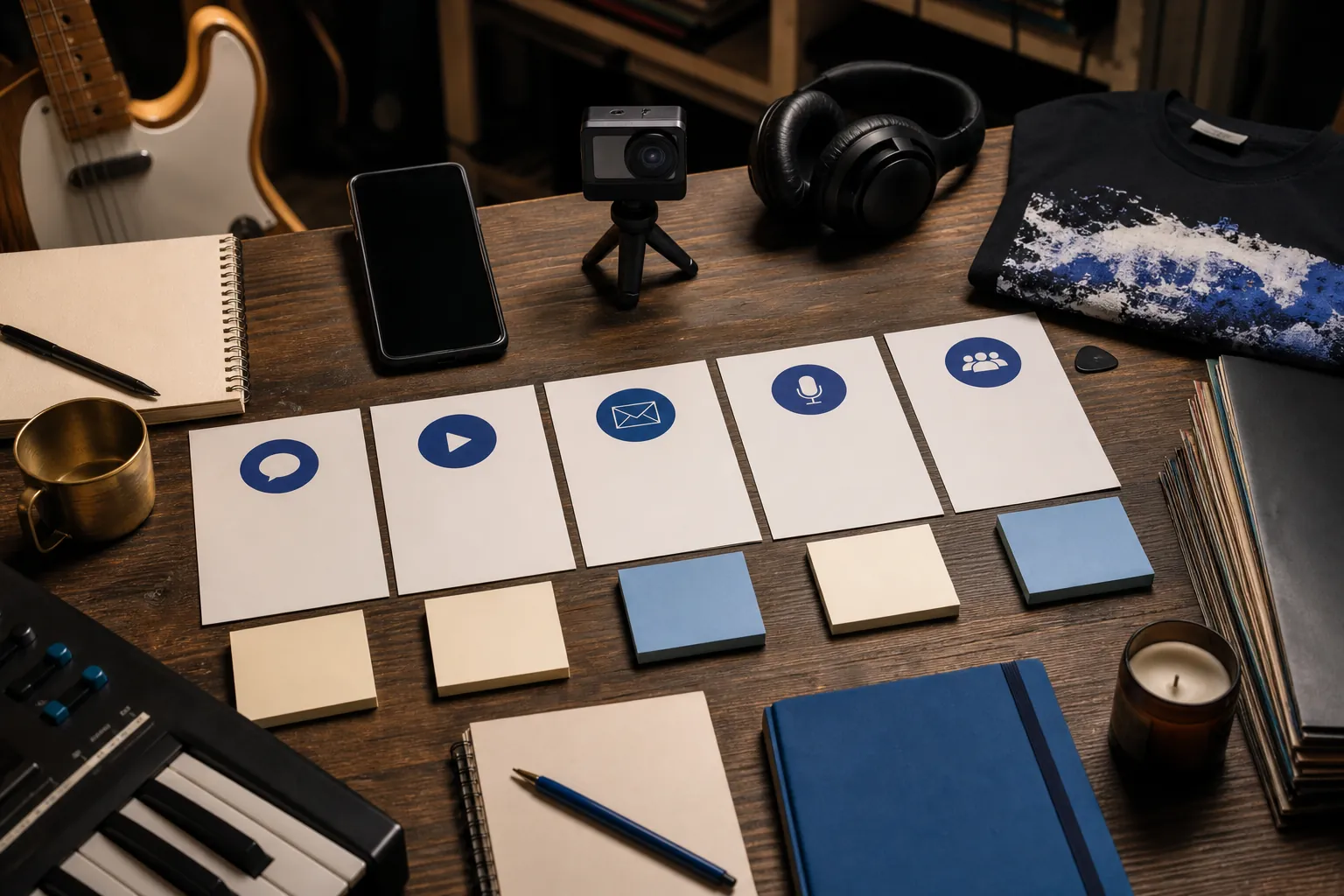
Streaming profiles are the first layer. Claim and update artist profiles before the campaign starts. Spotify's artist support says Spotify for Artists helps artists promote music, understand their audience, and manage the artist profile in one place. Spotify's promotion guidance also points artists toward followers, playlist pitching, campaign tools, and Spotify Ads Manager. Apple Music for Artists offers shareable assets, milestones, badges, QR codes, embedded players, and Linkfire links that can point fans to multiple streaming services. Apple's artist promotion tools can help turn a streaming profile into something artists actively use, not just something fans stumble across.
YouTube deserves its own plan because it is not just a video archive. YouTube for Artists says an Official Artist Channel brings an artist's body of work into one main channel and gives fans a clearer landing place. Its channel guidance recommends using the banner to tease releases, announce tour dates, or showcase merch, and keeping profile imagery consistent across social platforms. YouTube's artist channel guide is a good checklist for making the channel look current before pushing traffic there.
Social content should not be only announcement graphics. Use performance clips, lyric moments, camera-to-phone explanations, production details, story-driven posts, fan prompts, rehearsal footage, show recaps, and collaborator moments. The same song can create multiple angles. The key is to make each post carry one reason to listen, save, comment, share, or come back.
Direct channels are where independent artists often underplay their advantage. An email list, SMS list, fan club, private community, or direct profile gives the artist a route that does not depend entirely on algorithmic timing. So, Indie's fan growth tools are built around that idea: attention is more valuable when it has somewhere to go after the first listen.
Make every asset reusable
Independent artists do not need endless assets. They need assets that can be reused without feeling lazy. Start with the core release kit: cover art, vertical performance clip, square visual, lyric snippet, press photo, one-sentence story, short artist bio, streaming link, merch or show link if relevant, and three caption angles.
Turn each strong idea into several formats. A behind-the-scenes studio clip can become a short video, a still image, an email section, and a release-week story post. A lyric line can become a caption, a video hook, a merch graphic, or a fan prompt. A live rehearsal can become a teaser, a post-release reminder, and proof that the song exists outside the file.
This matters because promotion dies when every post starts from a blank page. A reusable asset system lets you keep showing up without inventing a brand-new campaign every morning.
Give listeners a next step
"Listen now" is fine, but it is rarely enough. A stronger campaign decides what the listener should do after hearing the song. Save it. Follow the artist. Join the fan list. Watch the video. Buy the shirt. Come to the show. Share the chorus with one friend. Reply with a memory. Pick one next step per message.
Avoid sending everyone everywhere at once. A bio link with twelve equal options can turn intent into indecision. For release week, make the primary action obvious. If the song is the focus, the streaming or smart link should lead. If the release supports a show, the ticket link should move up. If the release supports merch, the product should be visible beside the music instead of buried after the moment has passed.
Spotify's release guidance connects music promotion with merch, tour dates, real-time streams, and post-release audience review. That is the right mindset. The campaign is not only a push for plays; it is a path from first attention to a deeper relationship.
Measure what happened after attention arrived
The release is not finished when the first-day numbers arrive. First-day data can be noisy. Look at the campaign in layers: discovery, engagement, conversion, retention, and revenue. Discovery asks whether new people saw or heard the song. Engagement asks whether they cared enough to watch, save, comment, replay, or click. Conversion asks whether they followed, joined, bought, shared, or showed up. Retention asks whether they came back.

Build a simple release review one week after launch, then again after the first month. Compare the strongest posts, the best traffic sources, the highest-intent fan actions, and the revenue signals. Did one platform drive saves while another drove comments? Did a behind-the-scenes clip outperform the polished teaser? Did fans click merch but not buy? Did one city show unusual interest? Those answers shape the next release.
This is where connected data matters. If streaming, campaign spend, fan actions, merch, shows, and royalties live in separate places, the artist has to guess which activity mattered. So, Indie's royalty and earnings view helps artists compare the money side with the campaign side, while the broader platform keeps release, marketing, fan, and operations work closer together.
Use paid promotion carefully
Paid promotion can help, but it does not fix a weak release plan. Before spending, make sure the song link works, the artist profile is current, the creative has been tested organically, and the next step is obvious. Start with a small test budget and compare creative angles before scaling. If one clip clearly earns stronger saves, clicks, or follows, put more weight there.
Be careful with services that promise guaranteed streams, playlist placements, or suspiciously cheap growth. Artificial activity can damage trust and create useless data. A thousand empty plays from the wrong audience are not better than a hundred real listeners who save, follow, reply, or buy. Promotion should create useful momentum, not vanity math.
A practical release promotion checklist
Use this as the simple version when the campaign starts to sprawl.
- Set one primary release goal and two supporting signals.
- Write the one-sentence story of the song.
- Prepare the core release kit before posting begins.
- Update artist profiles, images, bios, banners, links, and pinned content.
- Pitch the track and gather the details platforms ask for while the song is still unreleased.
- Plan four weeks of content angles, not four weeks of identical reminders.
- Choose one primary listener action for each campaign message.
- Connect streaming links, social posts, email, shows, merch, and direct fan channels.
- Review results after one week and one month, then use the lesson on the next release.
How So, Indie helps
So, Indie gives independent artists a cleaner place to run the business around the music. Instead of treating distribution, campaign planning, royalties, fan growth, merch, and release operations as separate chores, it connects them into one operating system.
That matters because promotion is not only about getting attention. It is about knowing what to do with attention once it arrives. Artists can use So, Indie to plan the release, organize campaign work, watch royalties and fan activity, and keep the next decision grounded in the whole business. Artists comparing plans can start with the pricing page or begin the free trial.
Frequently asked questions
How early should I start promoting a song?
Start four to six weeks before release if you can. That gives you enough time to finish assets, pitch the song, warm up your audience, build pre-save or save intent, and avoid forcing every important decision into release week.
What is the best way to promote music with no budget?
Use the channels you can work consistently: short video, direct fan messages, email, community posts, artist profile updates, and collaborations. A small budget helps, but the stronger move is a clear story, repeated creative, and a simple path for listeners to save, follow, buy, or share.
Should I focus on playlists or social media?
Use both, but do not treat either one as the whole campaign. Playlist activity can create discovery, while social and direct channels help people understand the artist and take the next step. A stronger campaign connects streaming, content, email, merch, shows, and fan follow-up.
How do I know if music promotion is working?
Measure the movement that matches the goal. For a release, that might be saves, follows, repeat listeners, email signups, merch clicks, ticket interest, or royalty movement after the first week. Streams matter, but they are more useful when you can see what caused them and what happened next.