Music marketing is not a contest to post the most. It is the work of giving the right people enough reasons to notice a release, spend time with it, and take a next step. For an independent artist, that next step could be a save, a follow, a reply, a ticket purchase, a merch order, or simply a second listen that starts a real relationship.
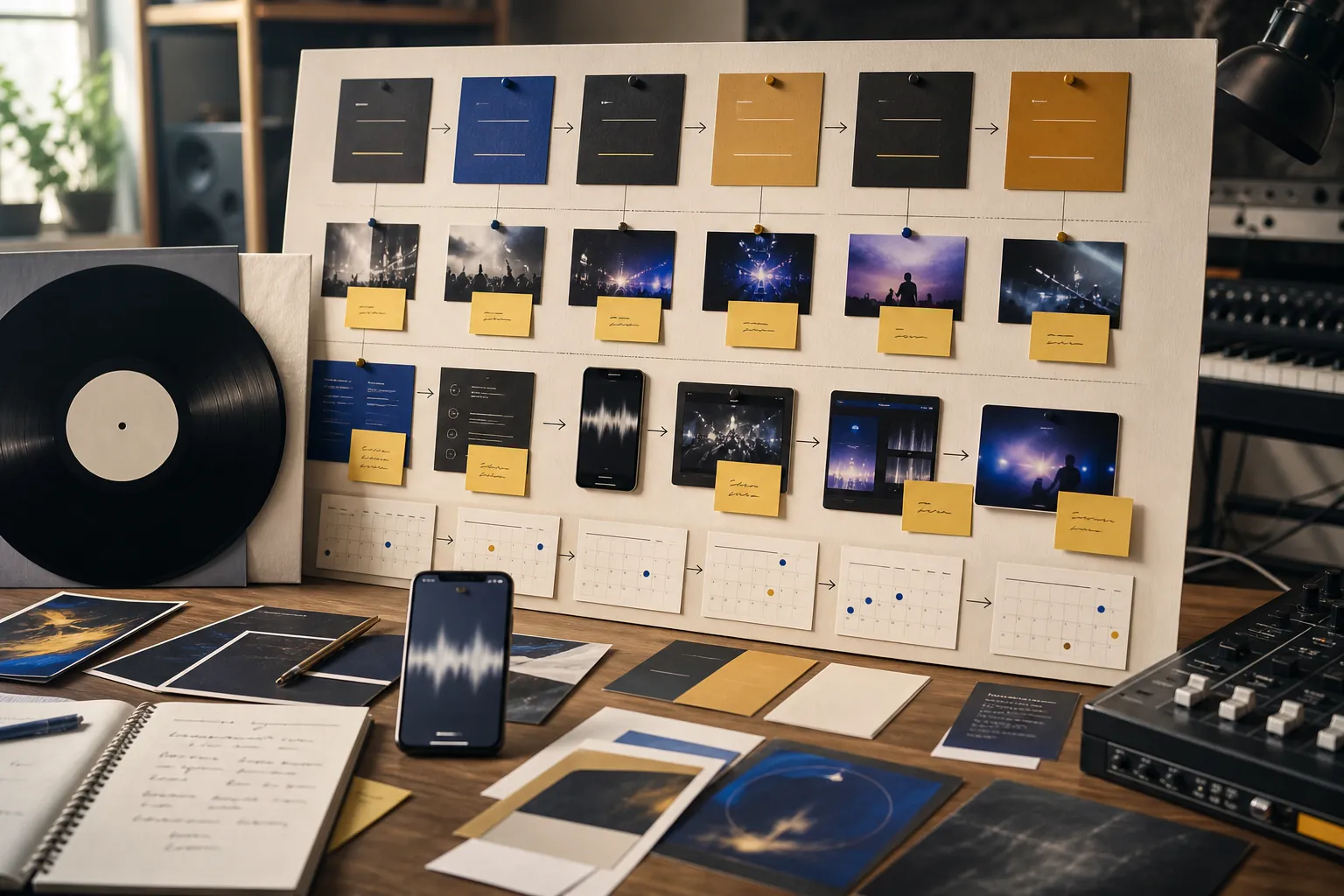
The strongest music marketing strategies make the work around a release feel connected. Instead of treating a song, a video, a short clip, an email, and a show as unrelated tasks, they give each one a clear job. That makes the campaign easier to run and much easier to learn from when it is over.
Use the six strategies below as a practical framework. You do not need every platform or a giant budget. You need a focused goal, a clear story, and a repeatable way to turn attention into a fan relationship.
That also means being honest about capacity. A campaign should fit the artist's actual time, team, and money. Three strong pieces of content, one reliable release link, and a thoughtful fan follow-up will usually do more than a frantic week of half-finished activity across channels that cannot be maintained.
1. Start with the listeners you want to matter to
“Everyone” is not an audience plan. The more clearly you can describe the people who are likely to connect with a release, the easier it is to make useful choices about content, channels, timing, and the action you ask for. This is not about excluding listeners. It is about making the first invitation feel specific enough to be recognised.

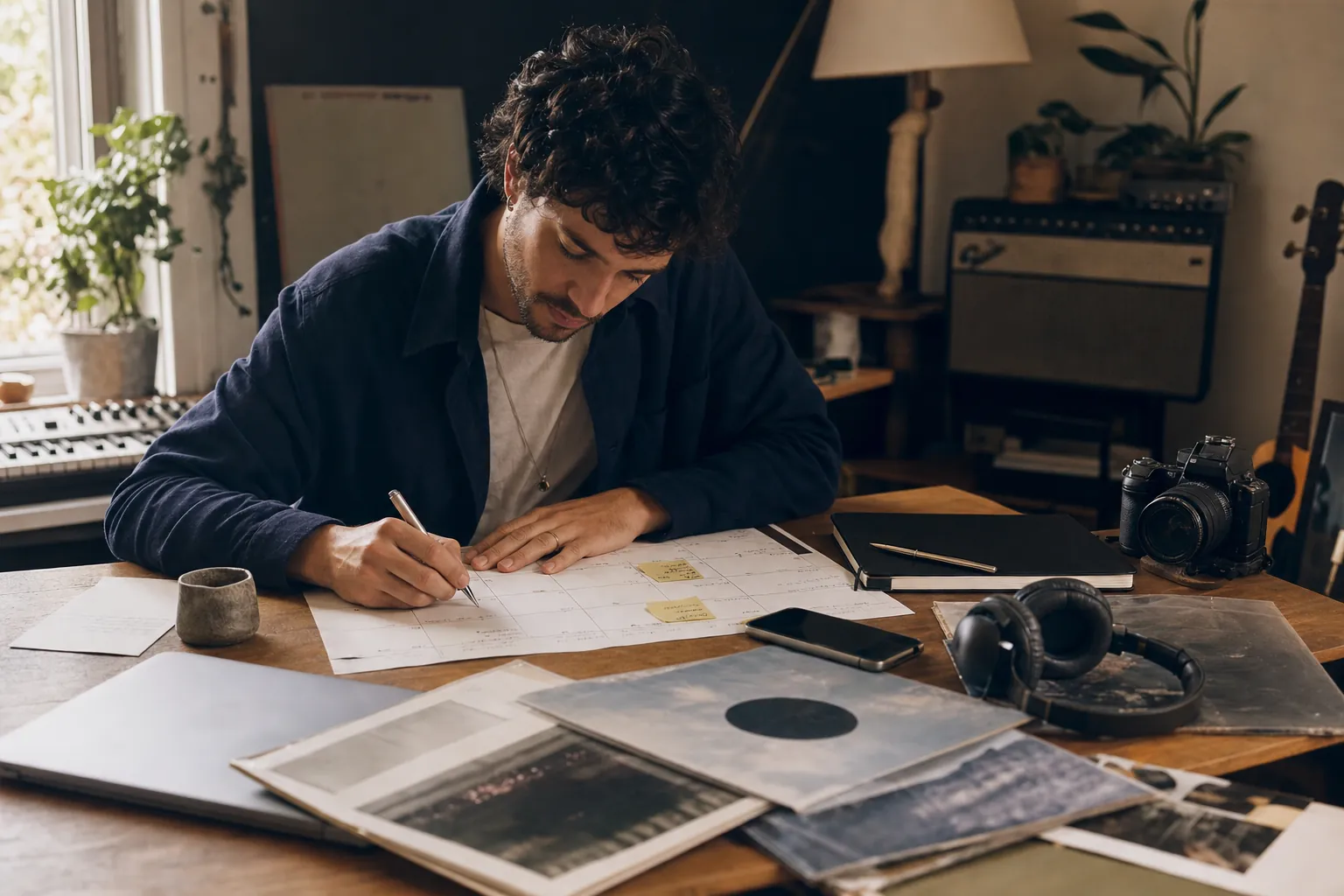
Write a short audience note before the campaign begins. Include what these listeners already care about, where they tend to find music, what makes them trust an artist, and what they might realistically do next. A singer-songwriter preparing for local shows may focus on nearby listeners who respond to live clips. An electronic artist may focus on fans of a few adjacent sounds who save playlists and share late-night video edits.
Look for evidence you already have. Read the comments and replies that sound specific. Notice the songs, cities, venues, or creators people mention around your work. Pay attention to which past clips earned a thoughtful response instead of a quick view. These clues are more useful than trying to invent a generic listener profile from a dashboard alone.
Then choose one action that fits that audience. New listeners may be ready to save a track or follow an artist profile. Existing supporters may be ready for a direct message, a merch drop, a ticket link, or an invitation into a fan community. So, Indie's fan growth tools are useful here because they give the attention a place to go after the first listen.
2. Build one release story people can repeat
Every campaign needs a simple human idea. Not a formal press release and not a made-up persona. It can be the feeling behind the song, the creative shift it represents, the place it came from, a live moment, or the reason this release matters now. A listener should be able to repeat the idea to someone else without needing a paragraph of explanation.
Try writing one sentence in plain language: “This is the song I wrote after leaving a city that still felt like home.” Or: “This is the first track from the project where I stopped trying to sound polished.” That sentence should guide the visual direction, caption ideas, short clips, artist-profile update, outreach, and live-show introduction.
A story does not mean every post says the exact same thing. It gives the campaign a centre. One post can show the live performance, another can explain the lyric, and another can share a fan reaction, while all three still feel like part of the same release. Artists who need a complete campaign calendar can use the 90-day music marketing plan to turn that story into a workable schedule.
3. Give every channel a different job
A short video, an artist profile, an email, a show, and a merch page should not all do the same job. Assign each one a role so the listener has a sensible next move. Discovery channels create curiosity. Streaming profiles and release links make listening easy. Direct channels deepen the relationship. Shows and collaborations create trust. Merch and tickets give the right fans a way to support the work.
Start with a lean mix: one discovery channel, one listening destination, and one direct relationship channel. For example, a live clip can catch a new listener's attention, the release link can make the first listen simple, and an email or fan community can invite the person deeper. That is far more useful than copying the same announcement across every platform.
This approach also helps you avoid weak calls to action. A short performance clip might ask for a save. A post aimed at existing supporters might ask for a reply or a ticket click. An email can ask for a more committed action because the audience has already invited you into their inbox. Matching the ask to the channel keeps the campaign from feeling demanding.
Spotify's release guide recommends preparing the artist presence and pitching a focus track before release, while YouTube's artist resources separate useful activity into pre-release, release-day, and post-release work. The shared lesson is straightforward: each stage and channel should have a job, rather than becoming a pile of last-minute reminders.
4. Turn content into a series, not a single announcement
One good song can support more than one piece of content. The goal is not to squeeze every second out of the release. It is to give listeners different ways into the same work. A person who does not respond to the cover art might care about a live take. Someone who skips a polished clip might stop for the story behind a lyric. A collaborator's perspective can reach people who have never heard the artist before.
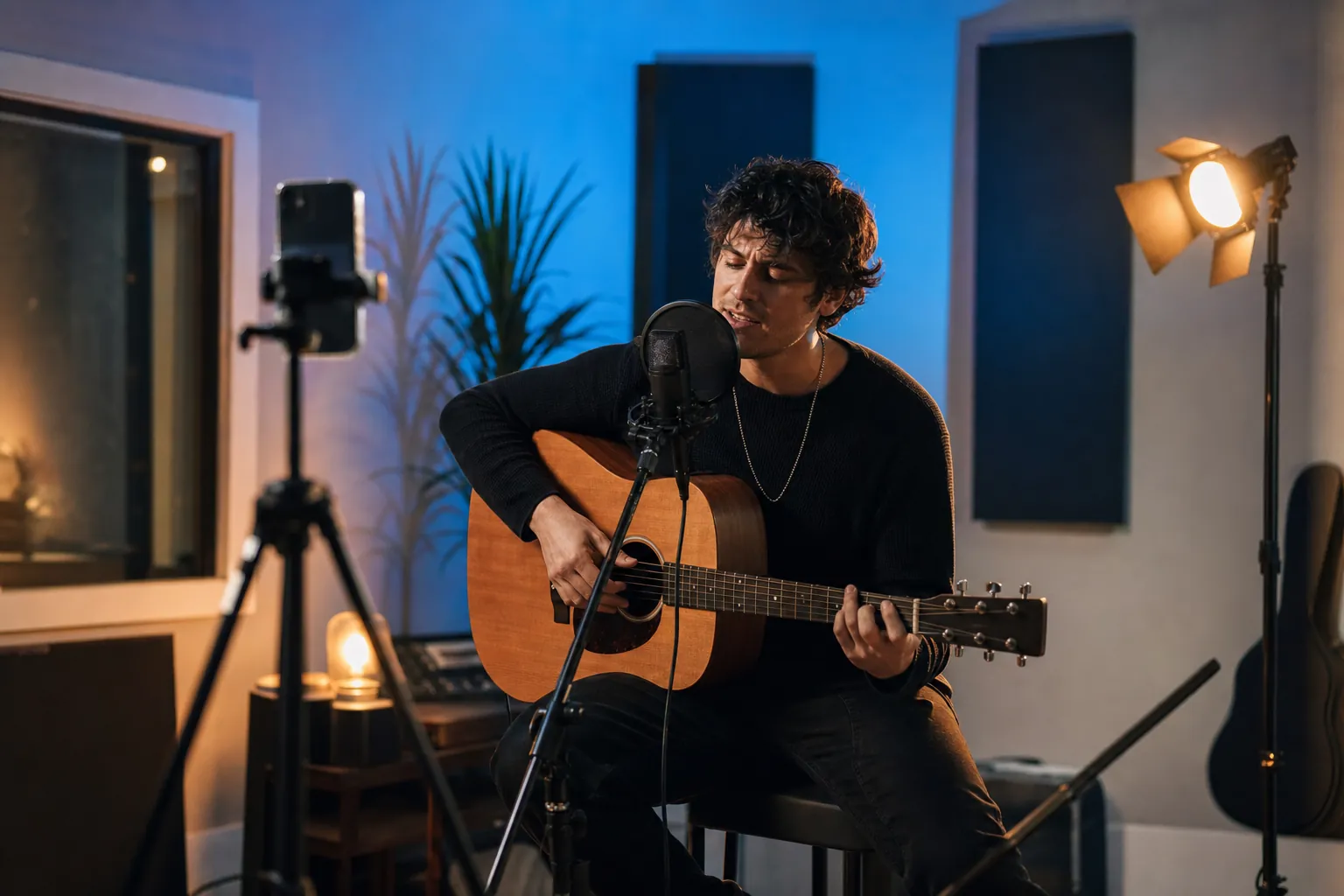
Make a short list of content angles before the release: the hook, a rehearsal, the writing story, a performance, a visual detail, a collaborator, a question for fans, a live-show moment, and a listener reaction. Then decide which ones are worth making well. You do not need to use them all. You need enough variety that the campaign keeps moving without pretending every post is a brand-new event.
Make the first few seconds do real work. Open with the lyric, the performance moment, or the visual detail that gives a stranger a reason to stop. Then make the next action easy to understand. The goal is not to manipulate attention; it is to let the song's strongest moment earn a fair chance with the right listener.
A series also makes the work more manageable. Record two or three performance clips in one session. Capture stills while setting up. Save a few words about the song while the story is fresh. Keep the strongest creative pieces for the weeks after release, when a song still needs new entry points.
5. Give interested listeners a direct path
Streaming is an important starting point, but it should not be the last place a fan can find you. When somebody cares, make it easy for them to choose a deeper relationship: follow the artist, join an email list, buy music or merch, see a show, enter a fan space, or receive the next release directly.
Choose one direct path for each campaign. A release tied to a tour might point warm listeners to city dates. A limited physical run might send people to a merch page. A project built around community might invite fans into an email list or fan club. Bandcamp describes its artist offering as a place where fans can discover, connect with, and directly support artists, which is a useful reminder that support needs a clear destination, not just a vague ask. See Bandcamp for Artists for one example of that direct-to-fan model.
The aim is not to push every listener toward a purchase immediately. It is to make sure the people who are ready to care have a route that is owned by the artist, not only by an algorithm or a feed. So, Indie connects fan relationships, campaign work, and release workflows so that route stays visible as the release grows.
6. Review the campaign while the details are still useful
A campaign is only wasted when you learn nothing from it. Set a review point one week after release and another about a month later. Look at the result that mattered most, the content that created the best response, the channel that brought the right people, and the next action listeners actually took.

Keep the scorecard short. Write down the goal, two supporting signals, the best-performing creative angle, the strongest source of attention, the money or fan-action signal, and one thing to change next time. That might reveal that a live clip brought more saves than polished artwork, that a collaborator drove more email signups than ads, or that a city showed ticket interest without buying.
Separate the result from the lesson. A post with a large view count may still be weak if it did not lead to listening, follows, or a meaningful conversation. A smaller post can be valuable when it brings the kind of fan who buys a ticket or joins a direct channel. Record both the visible number and the business outcome before deciding what to repeat.
This is where a connected view becomes valuable. When release work, campaign spend, fan actions, merch, and royalties live in separate places, the artist has to reconstruct the story after the fact. So, Indie's royalty visibility and campaign tools help keep those decisions in one working picture, so the next move can be based on more than a stream total.
A simple music marketing checklist
- Describe the audience you want to reach in plain language.
- Choose one primary release goal and two supporting signals.
- Write the one-sentence story behind the release.
- Give every channel a defined job in the campaign.
- Prepare several content angles before release week.
- Make one direct next step easy for interested listeners.
- Review the campaign after one week and one month.
- Carry the best lesson into the next release.
How So, Indie helps
So, Indie gives independent artists one place to run the work around the music. Instead of separating distribution, campaign planning, creative, fan growth, merch, publishing, and royalties into unrelated tasks, it connects them so a release can become a more durable artist business.
Use the strategies in this guide to choose the right work, then use So, Indie to keep the moving parts visible. Artists can explore the music marketing tools, compare the available plans, or start a free trial when they are ready to put the system to work.
Frequently asked questions
What are the most effective music marketing strategies for independent artists?
The most effective strategies connect to one another: define the audience, tell one clear release story, use each channel for a specific job, turn content into a series, give interested listeners a direct next step, and review the campaign after release. The right mix depends on the artist's goal, available time, and existing audience.
How much should an independent artist spend on music marketing?
Spend only after the release path is ready and there is a specific question to answer. A small test can be useful when it has one job, such as reaching listeners in a city before a show or sending warm fans to a merch drop. Do not spend simply to make a stream count look larger.
How often should musicians post on social media?
Post as often as you can sustain without repeating the same message. A release is easier to follow when it has several useful angles, such as a performance clip, the song story, a lyric moment, a collaborator, a fan response, or a live version. Consistency matters more than forcing daily posts that add nothing new.
What should artists measure after releasing music?
Measure the action the campaign was meant to create. That might include saves, follows, repeat listeners, email signups, ticket clicks, merch sales, replies, or a useful royalty signal. Pair the result with the creative and channel that produced it so the next release starts from evidence rather than guesswork.