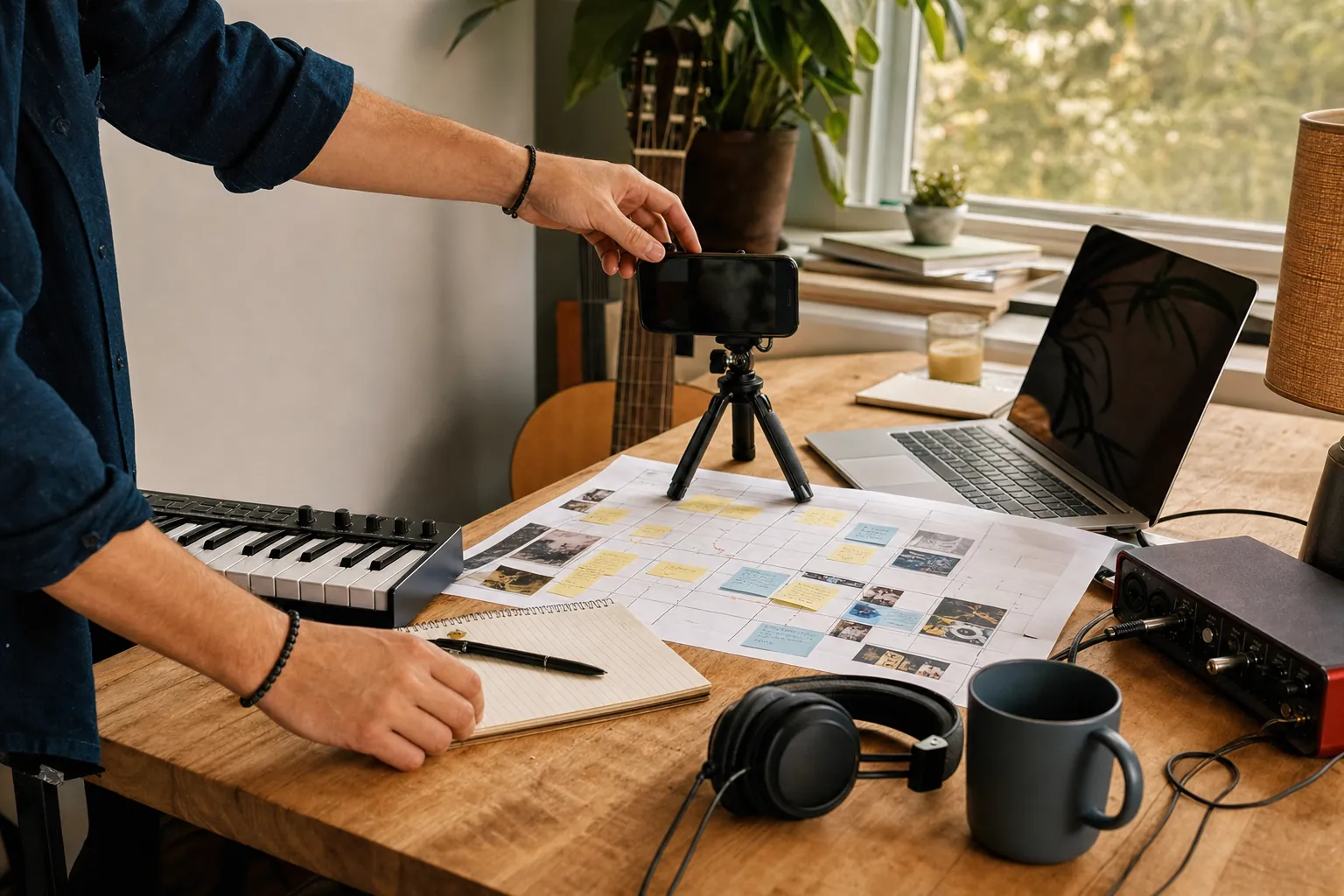
TikTok can give a song a useful first moment with people who have never heard of the artist. It can also become a frustrating place to post clips that collect views but do not create a listen, a follow, a reply, a ticket sale, or any durable connection. The difference is not finding a magic format. It is giving each video a clear job inside the release.
For an independent artist, that means treating short-form video as one part of the campaign, not the entire campaign. A strong TikTok plan prepares the music, artist profile, story, content angles, listening destination, and review process before the pressure of release week arrives. The goal is to make it easy for the right person to discover the song, understand why it matters, and choose a next step.
This guide explains how to promote music on TikTok with a plan that fits a real independent release. Use it to create a repeatable process, then keep the best lessons for the next song instead of starting from zero every time.
1. Make the artist and release easy to find
Before filming a teaser, make sure the profile can do its job. A new listener should be able to tell who the artist is, what is happening now, and where the music lives. Check the profile image, bio, link destination, pinned videos, recent posts, and the sound attached to the release. Do not send attention to a profile that looks abandoned or makes the listener guess where to go.
Artists with released music can use TikTok's Artist Account tools. TikTok describes the Artist Account as a way for fans to find music, the creative process, and new releases. Its features include a Music Tab for the catalogue, a New Release tag around launch, a pinned artist video option, and Behind the Song for sharing the story around a track. Read TikTok's Artist Account overview before building the campaign, then use the available features that fit the release.
The music itself needs a clean route as well. Make sure the correct released sound is available, the artist profile reflects the current project, and the link points to one useful destination. During a single campaign, that may be the track, a pre-save, a show, a direct fan list, or a merch drop. The right answer changes with the goal, but an overloaded link page rarely helps a first-time listener decide.
Keep this prep connected to the wider release work. So, Indie's distribution and release workflows help artists keep delivery, campaign timing, and the fan path from drifting into separate lists. The release operating system is a useful companion when the campaign needs a fuller calendar.
2. Find the moment that earns a stop
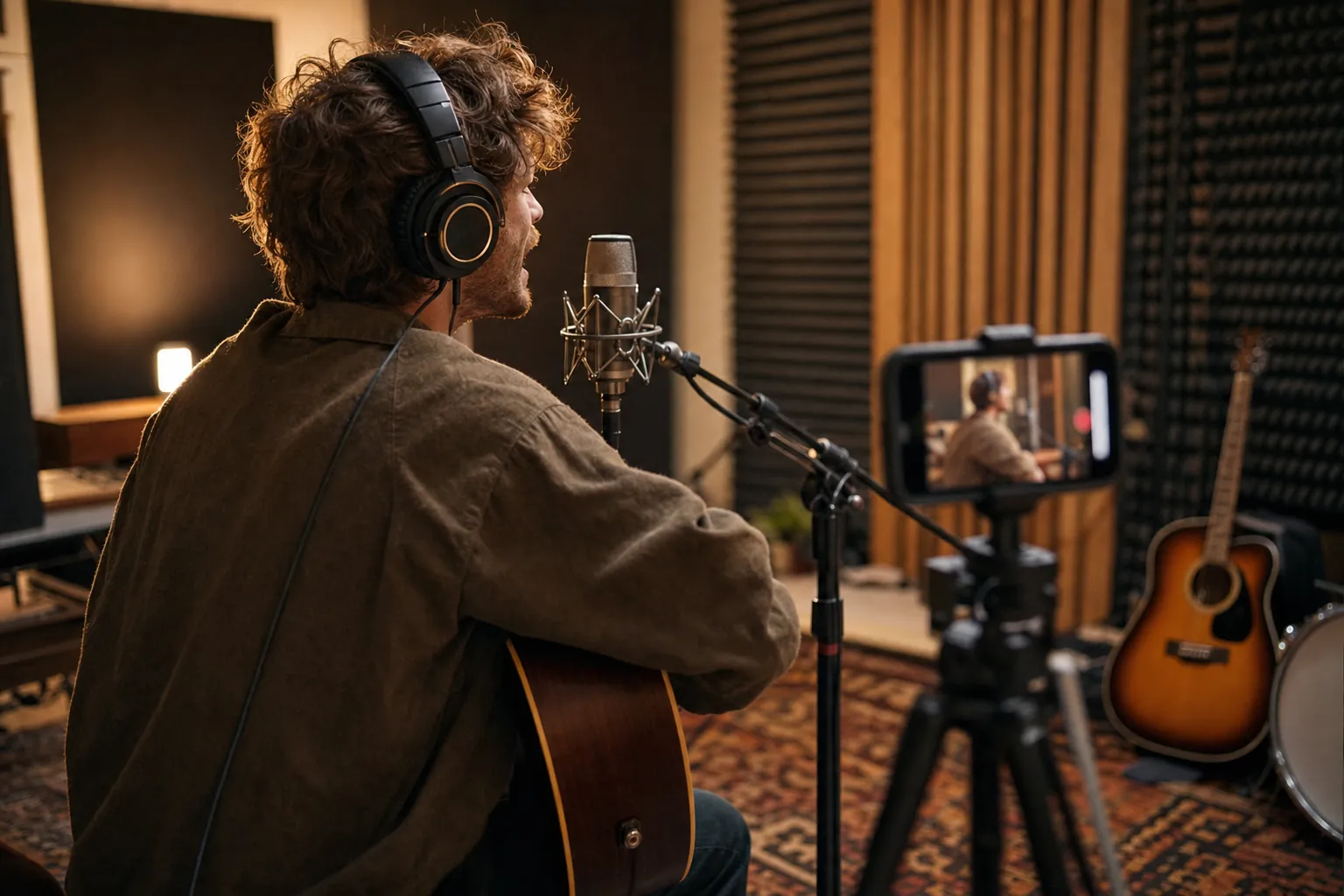
The first job of a TikTok video is simple: give someone a reason to pause. Start with the strongest moment you have, not a long lead-in about the song. That could be a vocal line, an instrumental change, a direct performance, a lyric that creates a question, a live-room moment, or a visual that makes the project feel specific.
Do not choose the clip only because it is the loudest part of the track. Choose the part that can carry a feeling or idea without a large explanation. A singer-songwriter might open with one line that changes the meaning of the verse. A producer might show the beat switch that changes the energy of the song. A band might use the first second of a rehearsal where the room comes alive. The video should make the listener curious about what happens next.
TikTok for Artists now gives eligible artists daily-updated views of music, post, and follower activity. TikTok says the platform includes song performance, post performance, follower insights, and a pre-release campaign tool in eligible markets. That makes it worth testing a few honest versions of the same musical moment rather than assuming one format is the answer. See the TikTok for Artists launch details for the current feature set.
A useful test changes one thing at a time. Keep the same hook and try a performance version, a lyric-led version, and a brief story version. Then compare the quality of the response. A comment that quotes a lyric, a share, a profile visit, or a listener asking for the release date can be more useful than a quick view that ends there.
3. Turn one song into a small content series
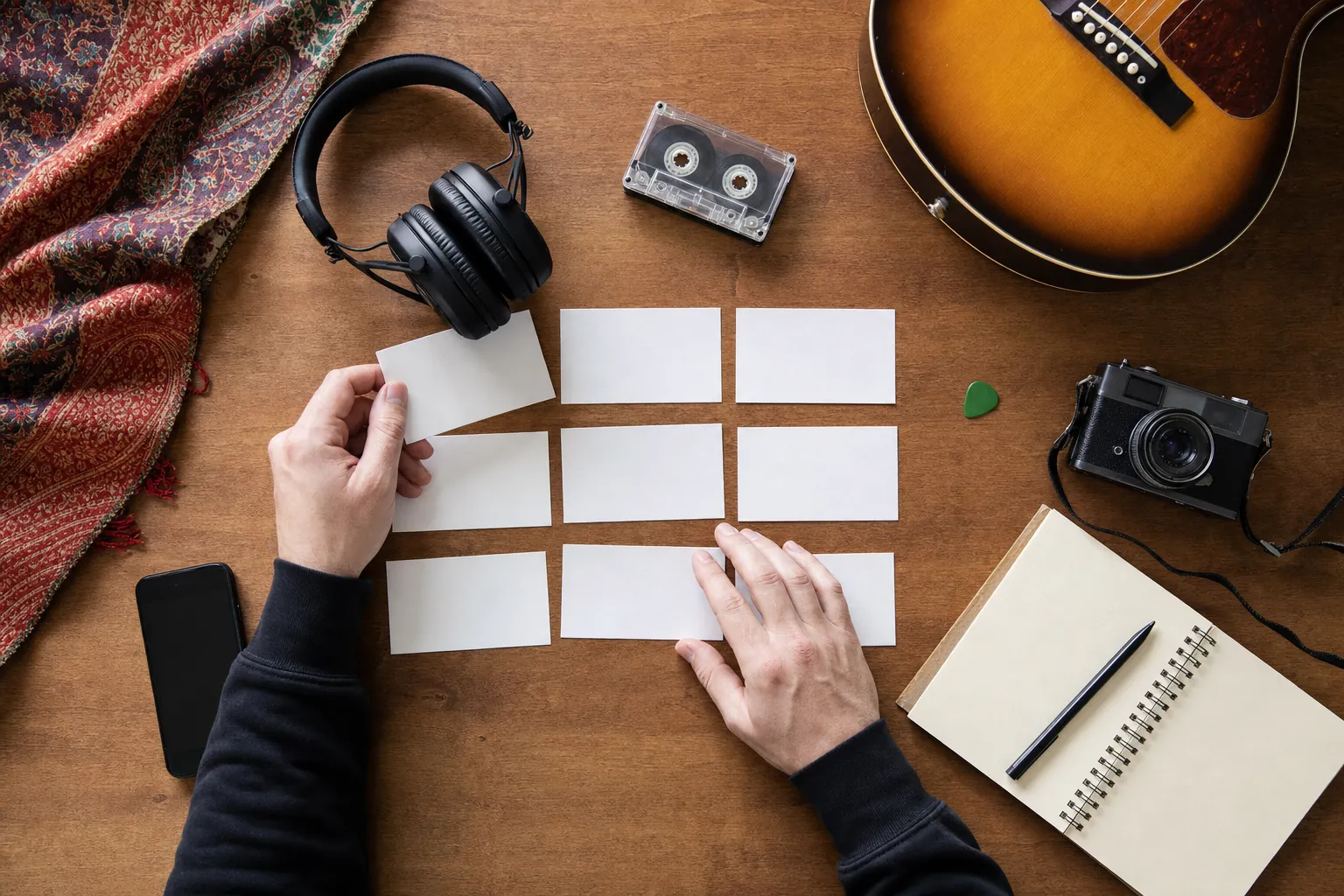
One announcement is rarely enough for a release. The better approach is to create several genuine ways into the same song so the campaign has room to breathe. That does not mean repeating the same caption with a new crop every day. It means letting listeners meet the music through the performance, story, process, and community around it.
Build a short list before release week. Start with a performance clip, then add the writing story, the production detail, a rehearsal or live version, a collaborator perspective, a lyric prompt, a visual reference, a fan question, and a post-release response. You will not need every idea. The point is to have enough useful material that the best response can shape what you publish next.
Make the series feel like an artist's world, not a content machine. If the song came from a real place, a conversation, a show, a late-night demo, or a creative shift, that is usually stronger than a forced trend. A listener does not need a manufactured backstory. They need an honest reason to recognise themselves in the track or remember the artist behind it.
Collaborations can extend that reach when they make sense. A featured artist can share their part of the song. A producer can show the detail they built. A local venue can use a live clip around a show. A supporter can respond to a fan prompt. Keep every partnership clear about what it is. Real enthusiasm travels further than a fake groundswell, and it gives the campaign better information about who is actually connecting.
For more ways to organise the bigger campaign, use the music marketing strategies guide. It helps assign each channel a job, so TikTok does not become the only place the release can succeed.
4. Give each stage of the campaign a job
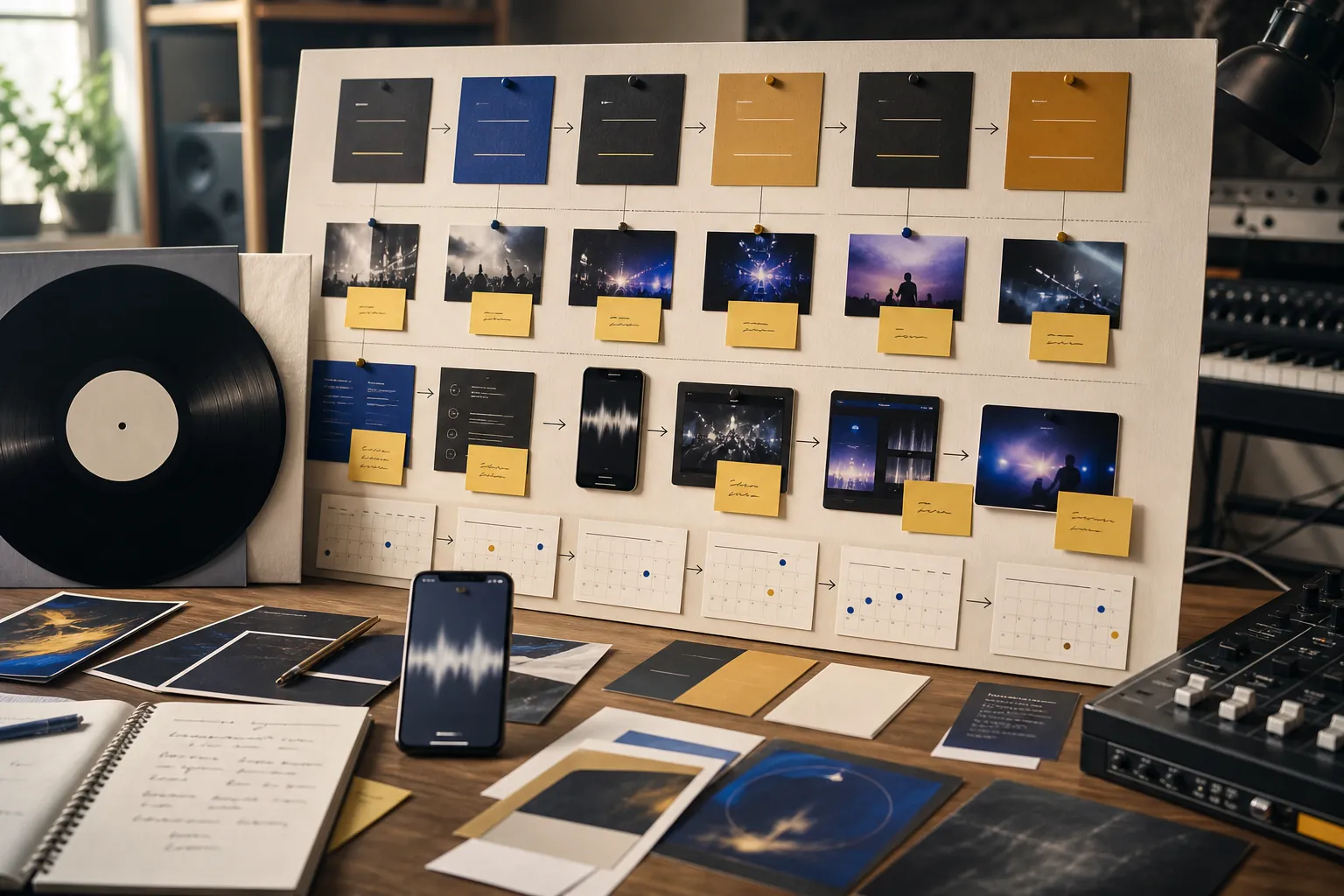
A simple sequence prevents the whole campaign from landing on release day. In the lead-up, use TikTok to introduce the world of the song and test the moments that make people stop. As the date gets closer, make the release path clearer. On release day, give the strongest clip a clean listening destination. In the weeks after, bring out the live performance, fan reaction, lyric context, or alternate take that did not fit into the first post.
Plan the sequence around the work happening elsewhere. Spotify recommends artists prepare their profile, pitch the focus track at least two weeks before release, and keep sharing after the track goes live. Its release-day guidealso points out that much of a release's first-year listening happens after the first month. TikTok can create the first spark, but the wider release plan is what lets an artist keep doing useful work after that moment.
Choose one action for each post. A pre-release performance clip may ask people to follow for the full track. A release-day post may point to the song. A post for current fans may invite a reply, a show visit, or a direct fan sign-up. When every video asks for a follow, a stream, a comment, a share, and a purchase at once, the listener usually does none of them.
5. Give interested listeners somewhere worthwhile to go
Short-form attention is valuable when the next move is easy. Think about the listener's temperature. Someone who just discovered a chorus may be ready to hear the whole song or follow the artist. Someone returning to a second or third clip may be ready for a direct fan channel, a ticket, a merch item, or a deeper story behind the release.
Match the destination to the campaign. A new single can lead to the release link. A local show can lead to tickets. A limited edition can lead to merch. A project that needs a closer community can lead to an email list or fan space. So, Indie's fan growth tools are designed for that second step, helping artists turn an interested listener into a relationship they can keep building.
Be careful with promises that guarantee plays, placements, or followers. Artificial activity does not build a listening habit, and it makes campaign results harder to trust. Spotify's guidance on artificial streaming is clear that automated or manipulated listening does not reflect genuine audience intent. A smaller group of real listeners who save, reply, return, or buy is more useful than a spike with no connection behind it.
6. Review the signal, then make the next release smarter
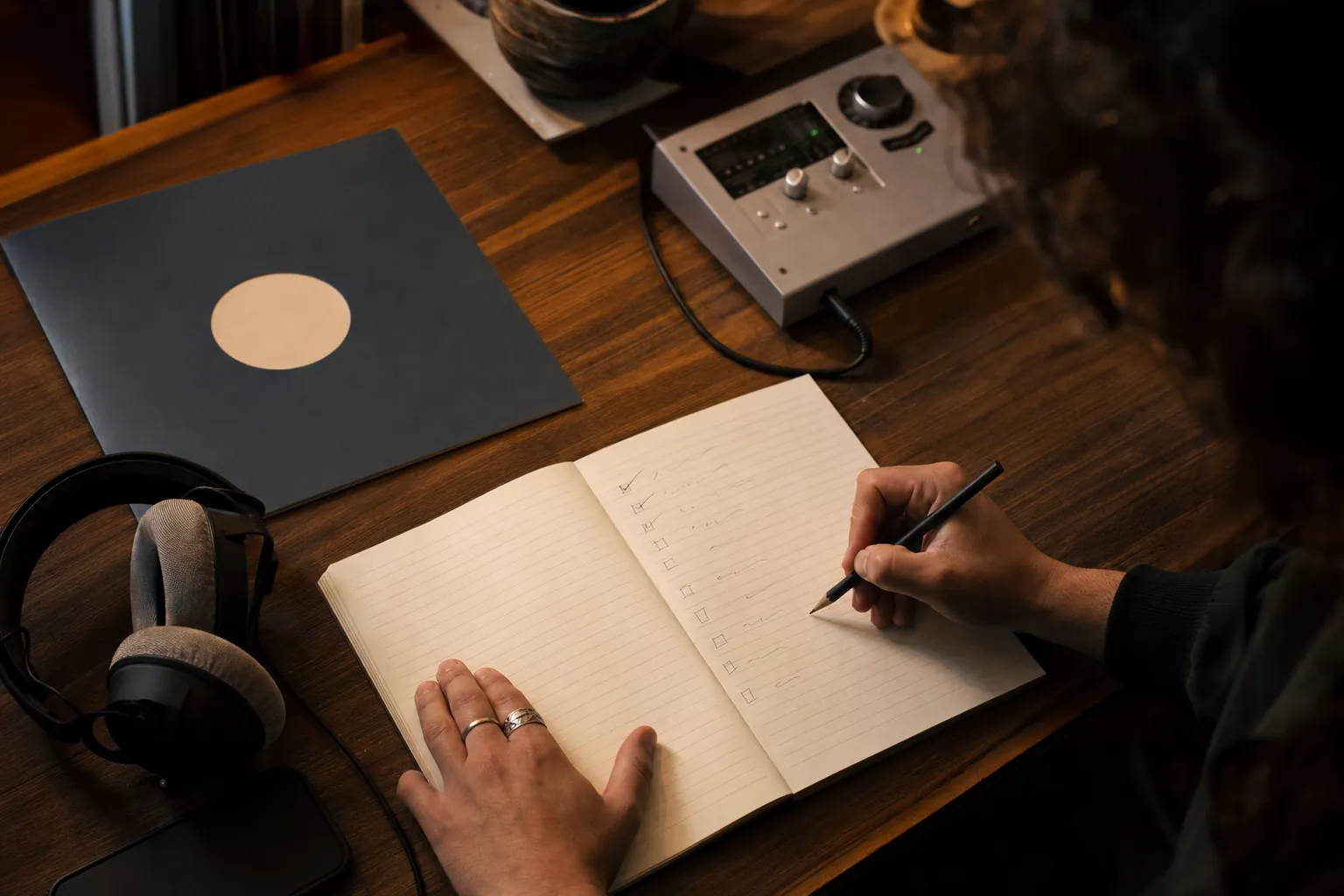
Do not judge a TikTok campaign from the largest visible number alone. Review what happened after the video. Did people watch through? Did they share it with somebody? Did they use the sound? Did profile visits rise? Did the song gain saves or follows? Did an email, show, or merch path see movement? The right measure depends on the goal you set before the campaign.
TikTok for Artists can help artists compare music, post, and follower responses. Pair that platform view with the rest of the release. A clip may create strong comments but little listening. Another may bring fewer views but more profile visits or direct fan replies. The second result can be more valuable because it reveals a clearer path from attention to interest.
Make a short review after release week and again a few weeks later. Write down the strongest hook, the best content angle, the action people took, the source of the response, and one thing to change next time. Keep the notes practical. “Live chorus clips created saves” is useful. “TikTok did well” is not.
So, Indie brings that decision-making closer together. Artists can connect campaign planning, release work, fan activity, and royalty visibility instead of trying to reconstruct the story from separate accounts after the fact.
A simple TikTok music-promotion checklist
- Make the artist profile, released sound, and release destination easy to find.
- Choose a musical or emotional moment that earns the first second of attention.
- Prepare several honest content angles around the same song.
- Give the lead-up, release day, and follow-through different jobs.
- Ask for one realistic listener action per post.
- Link the video to a release, fan, show, or merch path that fits the campaign.
- Review listening and fan signals, not only views.
- Carry the strongest lesson into the next release.
How So, Indie helps
So, Indie gives independent artists a connected place to run the work around a release. TikTok content can create discovery, but it is more useful when the artist can see how it connects to distribution, campaign planning, direct fan activity, merch, shows, and the money around the music.
Use this guide to shape the TikTok side of the release, then use So, Indie to keep the next decision grounded in the full artist business. Explore the music marketing tools, compare the available plans, or start a free trial when you are ready to put the system to work.
Frequently asked questions
How often should an artist post on TikTok to promote music?
Post at a pace you can sustain while keeping each video useful. Prepare several content angles around a release, then let the strongest responses guide the next posts. A clear series is more valuable than a burst of near-identical announcements.
What kind of TikToks should musicians make?
Make videos that give people a reason to stop: a strong performance moment, the story behind a lyric, a studio detail, a live clip, a collaborator perspective, a fan prompt, or a useful look at the artist's process. Each post should have one idea and one realistic next step.
Can TikTok help an independent artist promote a new release?
TikTok can introduce the music and the artist to new people, but the campaign needs a clear path beyond the view. Link the content to a released sound, artist profile, streaming destination, direct fan channel, show, or merch offer that fits the goal of the release.
How do artists know whether TikTok promotion is working?
Look beyond raw views. Review watch-through, shares, comments, saves, profile visits, sound use, streaming movement, follows, direct fan actions, and any ticket or merch interest tied to the campaign. The best signal is the one that matches the goal set before the release.